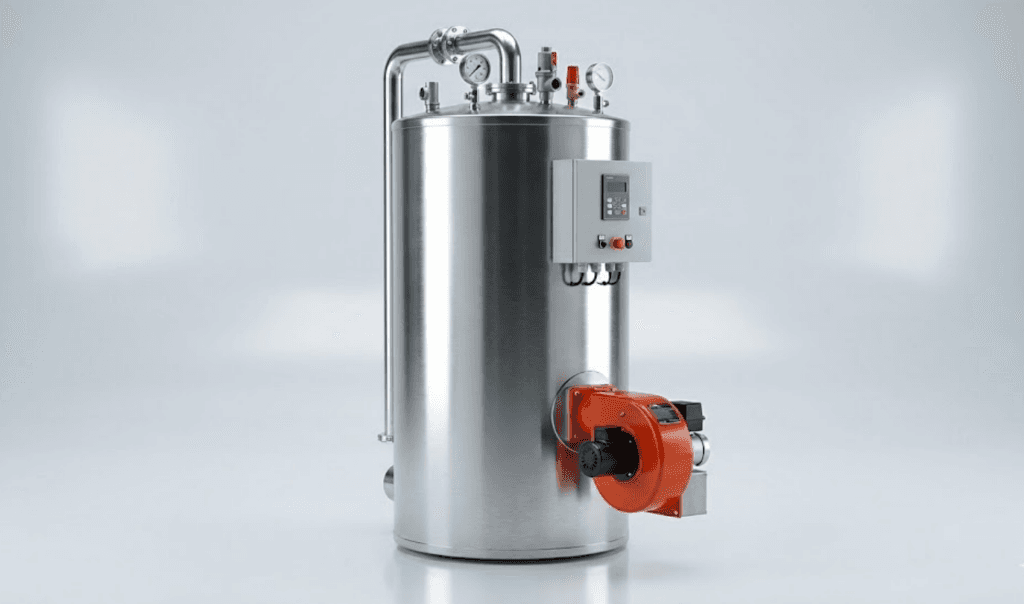
The burner is the heart of gas-fired boilers. When it fails, production stops. Here is a technical breakdown of common ignition failures.
The Ignition Sequence Explained
Understanding the sequence helps locate the fault:
-
Fan On: Pre-purge to clear gases.
-
Ignition Spark: Transformer creates a spark.
-
Pilot Valve Open: Gas released to pilot.
-
Flame Detected: Sensor sees pilot flame.
-
Main Valve Open: Full firing.
Common Failure Points
1. Pre-purge Failure (Fan won't start)
-
Check: Motor contactor and fuses.
-
Check: Air Pressure Switch. This safety device confirms airflow. If the fan is dirty or flue is blocked, it won't close, and the burner will lockout.
2. Spark but No Flame
-
Check: Gas supply ball valve. Is it open?
-
Check: Ignition electrode gap. Should be 3-5mm. If too wide, spark is weak.
3. Flame Starts then Trips
-
Check: Flame Sensor (UV or Ionization). If the sensor is dirty (soot), it cannot 'see' the flame. Clean it with a soft cloth.
-
Check: Grounding. Most sensors rely on the frame ground to complete the circuit.
Expert Tip: Count the seconds before lockout. If it's immediate, it's an electrical interlock. If it's after 3-5 seconds, it's likely a flame detection issue.